

Last updated: October 2026
Quick answer: A biometric attendance system for factory use records entry and exit by fingerprint, face or card at the gate, and sends that data to payroll. Most installations fail on three things: the air at the gate, the queue at shift change, and how the data reaches your payroll software.
Investing in a biometric attendance system for factory use looks like a simple purchase. One box, one wall, done. Then the first Monday arrives, 180 workers queue at one reader, the supervisor opens the manual register again, and the machine becomes an expensive clock.
The hardware is rarely the problem. The plan around it is. Below are the 6 mistakes we see most often in plants, and how to pick the right reader for your gate.
What does a biometric attendance system for factory use include?
A biometric attendance system for factory use includes four parts: the readers at each gate, the cabling and power that feed them, the software that stores punches, and the export that reaches payroll.
A biometric reader is a device that identifies a person by a physical feature such as a fingerprint or face, instead of a card or a signature. It stores a mathematical template, not a photograph of your finger.
Most plants need more than one reader. Main gate, staff entry, and often a separate point for contract labour.
Biometric attendance system for factory floors vs a small office setup
An office setup serves 20 to 40 people who arrive over an hour. A plant gate serves hundreds who arrive in the same ten minutes, in dust, in heat, and in three shifts.
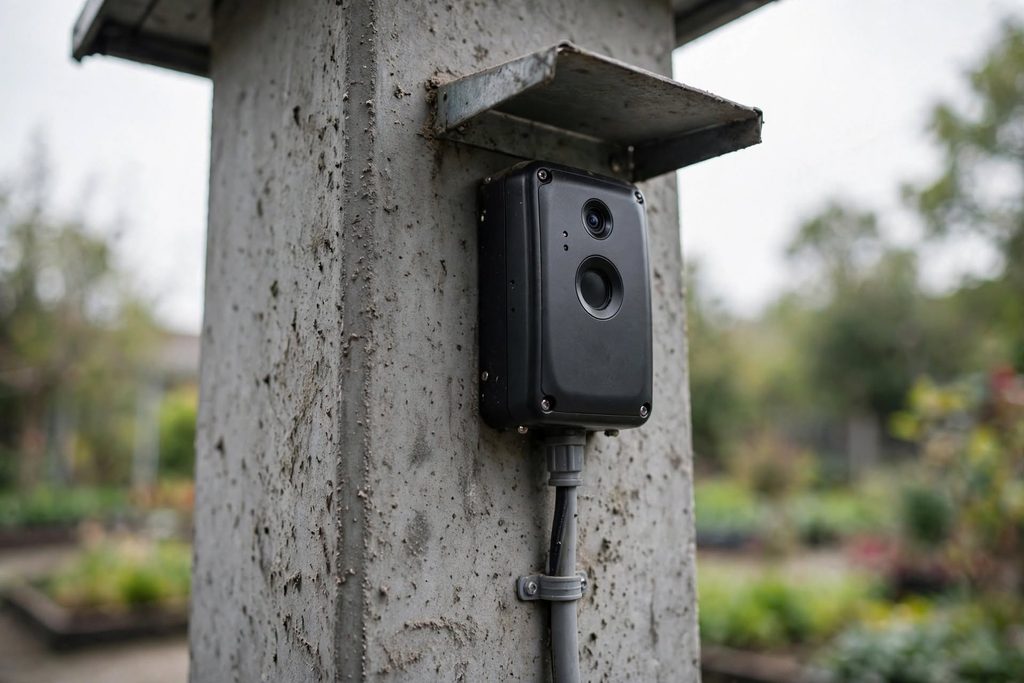
That difference changes everything. Office machines sit in air-conditioned reception. whereas a robust biometric attendance system for factory floors faces monsoon spray, grinding dust, direct afternoon sun, and hands that have been on a machine all night.
6 costly mistakes when buying attendance machines for a plant
Each one below costs money after installation, not before. That is why they get missed.
- Buying your biometric attendance system for factory operations before deciding how data reaches payroll. Ask first: which software calculates salary, what file format does it accept, who downloads the data, and how often. If nobody can answer, the punches will sit in the device while HR keeps using the register.
- Ignoring the air at the gate. Grinding dust, oil mist and chemical fumes settle on a sensor within weeks. Direct sun on a reader causes read failures. A small shed over the unit and a sealed model solve problems that no software setting can.
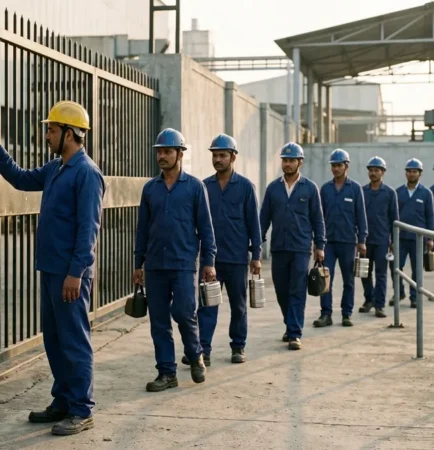
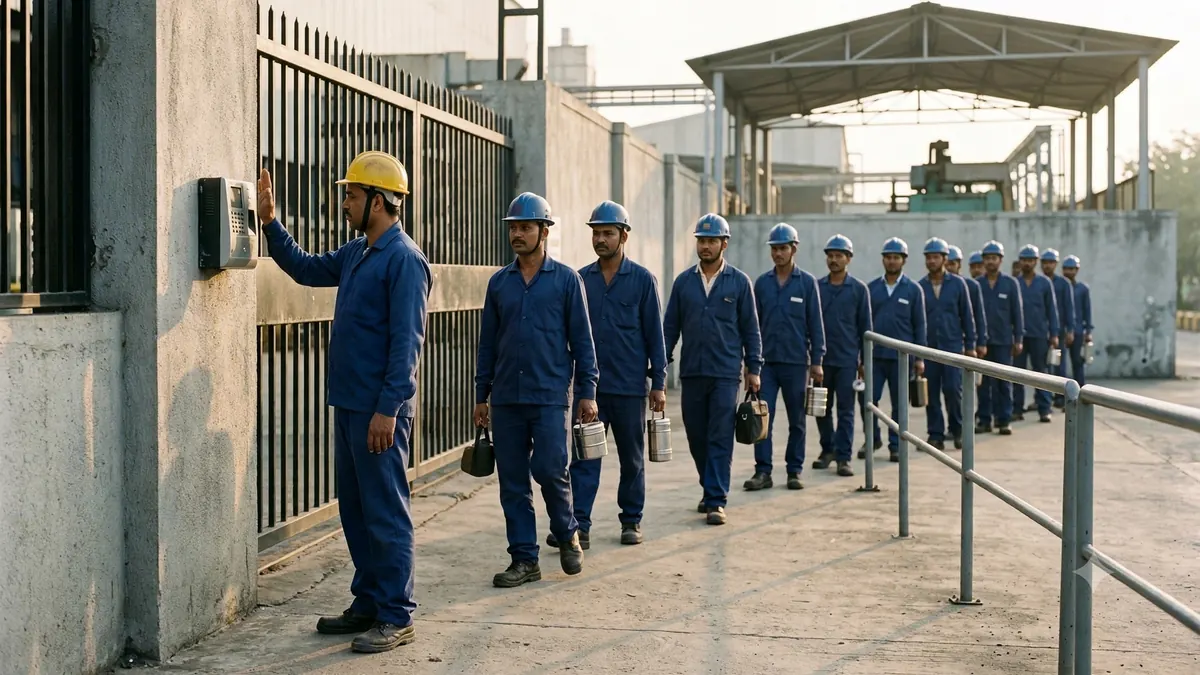
- Putting one reader at a gate used by 200 people. Even at two seconds per punch, 200 workers need close to seven minutes of unbroken queue, and real queues are never unbroken. Count heads per gate per shift, then decide the number of readers.
- Leaving your biometric attendance system for factory gates with no power or network backup. Power cuts rarely wait for a convenient hour
- Forgetting contract labour, drivers and visitors when planning a biometric attendance system for factory premises. In most plants this group is larger than the permanent staff
- No consent and no deletion rule for biometric data. Employee biometric data is personal data in India. A system installed without written notice, consent and a retention rule creates a problem that surfaces during an audit, not on day one.
Face, fingerprint or card: which reader suits your plant?
Pick by the condition of your workers’ hands and the light at your gate, not by the feature list.
| Reader type | Works well when | Weak point |
|---|---|---|
| Fingerprint | Office and staff gates, low dust, smaller numbers | Worn, wet or cut fingers; dust on the sensor |
| Face recognition | Dusty hands, gloves, faster queues, touch-free entry | Strong backlight or direct sun at the gate |
| Card or RFID | Contract labour, drivers, visitors | Cards get shared, so proxy punching returns |
| Palm or vein | Workers with damaged fingertips | Fewer models and slower local service support |
Is a face recognition attendance machine better in dust?
Usually yes. Choosing the right biometric attendance system for factory operations with face recognition does not depend on the condition of a worker’s hands, which is the single biggest cause of failed punches in grinding, dyeing, packaging and food units.
The trade-off moves to light. Mount the unit indoors or under cover, facing away from the open gate, so the afternoon sun is behind the camera and not behind the worker.
When a fingerprint attendance machine still makes sense
A fingerprint attendance machine is the practical choice for office blocks, QC rooms, stores and any gate under about a hundred people with clean hands.
It costs less per point, which matters when you need five or six locations. In many plants the honest answer is a mix: a fingerprint attendance machine for staff areas, face readers at the production gate.

Employee biometric data and India’s DPDP rules
Under India’s data protection law, a fingerprint or face template of an employee is personal data, and your company is responsible for it.
The DPDP Rules were notified in November 2025, and most obligations have to be in place by 13 May 2027. In practice that means four things at the plant level: a written notice and consent at joining, storing templates rather than raw images where the device allows it, a decided retention period with deletion after a worker leaves, and controlled access to the attendance server.
Treat this as a planning point, not legal advice. Confirm your exact obligations with your legal advisor and read India’s data protection framework on the MeitY site.
What changes in a three-shift GIDC plant
Shift timings decide the hardware count. Three shifts mean three rush windows every day, and a gate that works at 9 am for staff can collapse at 8 am for workers.
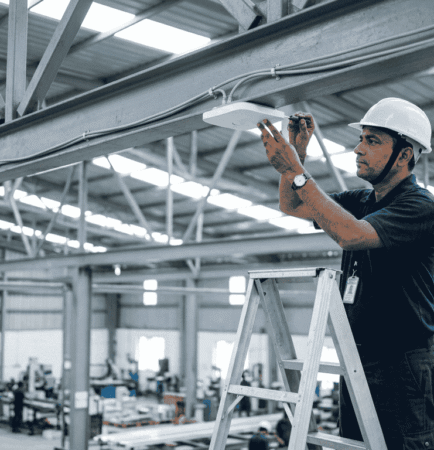
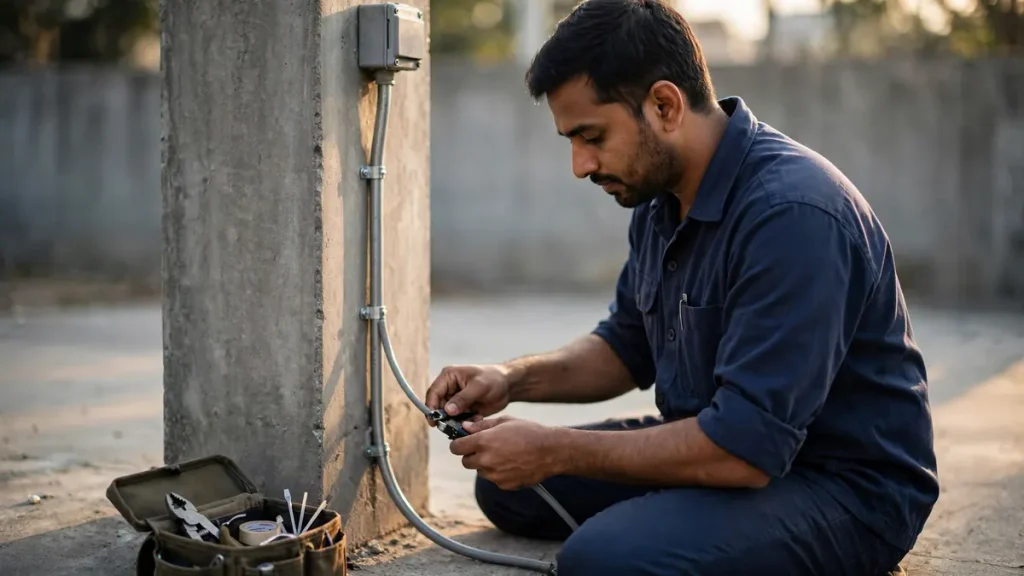
Two more local points. Monsoon spray reaches readers mounted on open gate pillars, so mount under cover with the cable entering from below. And the run from the gate to the office rack is often longer than people assume, so plan the cable path with the 100 metre limit in mind, with surge protection on that line.
Keep the manual register running in parallel for the first month. Every plant finds two or three workers whose punches fail, and you want payroll to be correct while you sort them out.
How A&T Technologies plans a biometric attendance system for factory sites
A&T Technologies, an IT sales and service company in Vapi, Gujarat, starts every biometric attendance system for factory sites with a free site audit. An engineer counts heads per gate per shift, checks the light and dust at each point, and asks which software runs your payroll.
You then get an honest recommendation, including the gates where a simple card reader is enough, a written scope, and the network cabling and access control and security work that goes with it.
FAQ about a biometric attendance system for factory use
How many attendance machines does a factory need?
Count the people entering each gate in the busiest ten minutes of a shift, not the total headcount. A gate handling 200 workers in one rush usually needs two readers, while a staff entrance of 40 people manages with one. Contract labour often needs its own point.
Does a biometric attendance machine work without internet?
Yes. Most machines store punches in local memory and sync when the network returns, which matters during power cuts and link failures. Confirm the offline capacity before buying, and confirm who checks that syncing actually happened each week.
Can attendance data be linked to Tally or payroll software?
Usually yes, through a scheduled export file or a direct integration, depending on the device and the payroll product. Check the exact file format your payroll software accepts before you buy the hardware. This is the step that gets skipped most often.
Is face recognition allowed for employee attendance in India?
Biometric data is treated as personal data under India’s data protection law, so you need a clear notice, consent, a retention period and controlled access. The rules were notified in November 2025 with a compliance deadline in May 2027. Confirm your obligations with your legal advisor.
What happens when a worker’s fingerprint does not read?
Every plant has a few. Workers in grinding, dyeing and chemical handling often have worn fingertips. Enrol two fingers per person, keep a card or face option for those cases, and give the gate supervisor a documented way to record a failed punch.
Get your gates surveyed before you buy
Tell us your headcount per gate and your shift timings, or let an engineer walk the gates and look at the light, dust and cable route. You get a written note: how many readers, which type at which gate, and how the data will reach your payroll.
Call or WhatsApp: +91 88660 33354 · Email: sales_india@a-ttechnologies.com
Office: D-311, 3rd Floor, M-Cube, Near Bombay Restaurant, Balitha, Vapi – 396195, Gujarat
Also read: Professional CCTV camera installation services in Gujarat · Computer AMC services in Vapi